
From Child Patient to Medical Student - Why I brought Teddy Bear Clinics to Bloom U
By Bella Tamulevich, MS1, Michigan State University College of Osteopathic Medicine
I still remember clutching my worn teddy bear as I walked into my kindergarten classroom that autumn morning. The room had been transformed into a miniature hospital, complete with white coats, stethoscopes, and the most magical thing five-year-old me had ever seen: medical students who made doctor visits feel like an adventure rather than something to fear.
That Teddy Bear Clinic changed my life. I watched in wonder as a kind medical student showed me how to listen to my teddy’s heartbeat, examined his "broken" arm with gentle hands, and explained why getting shots would keep both of us healthy and strong. By the time I left that day, my fear of doctors had vanished, replaced by something entirely different: a dream. I wanted to be just like those medical students - someone who could help others feel safe, curious, and cared for.
Now, as a first-year student at Michigan State University College of Osteopathic Medicine, and as the head of our Pediatrics special interest group, I have the incredible opportunity to come full circle. We are going to continue to bring Teddy Bear Clinics to Bloom U, and I couldn't be more excited to offer other children the same transformative experience that sparked my journey into medicine.
What Exactly Is a Teddy Bear Clinic?
Teddy Bear Clinics are interactive health education events where children ages 5-8 bring their beloved stuffed animals to receive "medical care" from medical students. So much more than just playtime, the clinics serve as a bridge between childhood anxiety and medical curiosity, transforming the often-intimidating world of healthcare into an accessible, engaging experience.
Research shows that early negative experiences with healthcare can create lasting fears that follow children into adulthood. By introducing medical concepts through play and imagination, we help children develop positive associations with healthcare settings, medical professionals, and their own bodies. When a child brings their teddy bear to any given “station” at a Teddy Bear Clinic to get a checkup, they’re learning that medical visits are normal, that asking questions is encouraged, and that taking care of their own health can actually be fun.
For many children in this age group, every new experience feels monumental. The unfamiliar sounds of a clinic, the clinical smell,the uncertainty of what might happen—all of these can trigger genuine fear. Teddy Bear Clinics meet children where they are, allowing them to explore experiences on their terms, with their trusted stuffy by their side.
A Win-Win Experience
What makes Teddy Bear Clinics particularly special is that they're mutually beneficial. As first-year medical students at MSU's College of Osteopathic Medicine, we've spent months immersed in anatomy, physiology, and pathology. We can tell you about the cardiac cycle, the immune response, and the musculoskeletal system. But knowing the science is only part of being a good physician—we also need to learn how to communicate complex health concepts in ways that are accessible, compassionate, and engaging.
Teddy Bear Clinics give us that opportunity. At our clinic, we'll guide children through six essential health stations:
Heart & Lung Health: Children will listen to their teddy bear's heartbeat and breathing, learning why these vital signs matter and how exercise keeps our hearts strong.
Nutrition: Through an interactive “build your healthy plate” game, kids will discover why fruits and vegetables are "superhero foods" that help their bodies grow strong and healthy.
Bone Health: Using simple models and pretend “xrays” we'll show children how their bones support them and talk about why calcium and vitamin D are important for building strong skeletons.
Vaccines: Perhaps most importantly, we'll demystify vaccinations, explaining how they're like training sessions that teach our bodies to fight off germs, using their stuffed animals as brave patients.
Five Senses, Brain & Eye Health: Interactive conversations and activities will help children explore how their eyes, ears, nose, tongue, and skin help them experience the world around them.
Germs & Viruses: Reading with kids a fun book on germs and viruses, we'll make the invisible world of microorganisms visible, teaching kids the importance of handwashing and hygiene in a way that sticks with them.
For us as medical students, these interactions are invaluable. We're learning to meet our patients at their level, to answer questions with patience and creativity, and to recognize that the best medicine combines scientific knowledge with genuine human connection.
Coming Full Circle
As we prepare to continue to welcome children and their stuffed companions to Bloom U, I think about that kindergarten version of myself—wide-eyed, curious, and just a little bit scared. I think about the medical student who took the time to make me feel heard and safe. And I realize that this is what medicine is truly about: not just treating illness, but inspiring health, curiosity, and dreams.
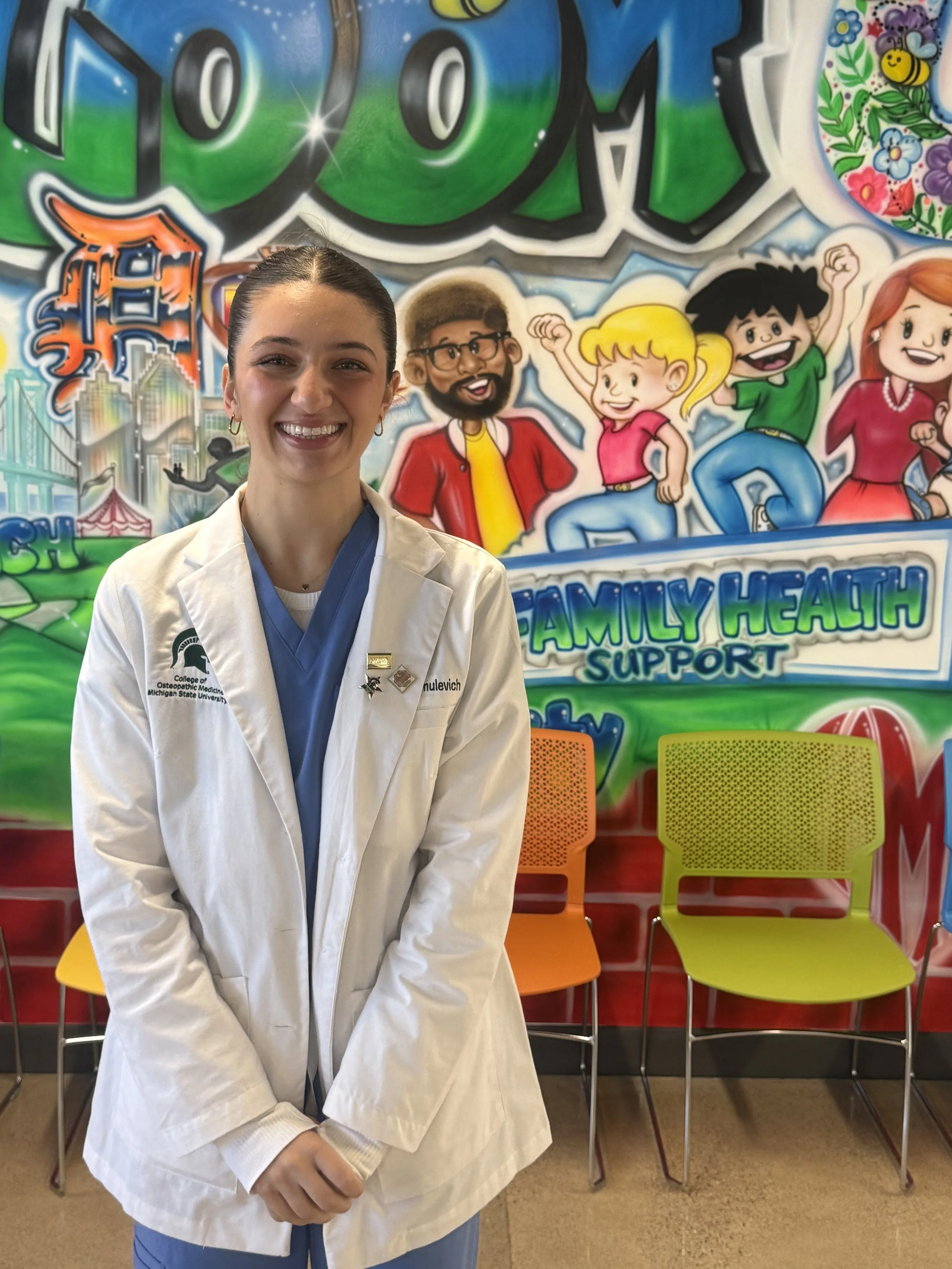
Bella Tamulevich, MS1
Bella Tamulevich
Bella is a first-year medical student at Michigan State University College of Osteopathic Medicine and is a Bloom Pediatrics medical assistant alum. She is passionate about children’s health and is the leader of the Pediatric specialist interest group MSU PIGS, who facilitates Teddy Bear Clinics in partnership with Bloom U.