
The Best and Worst Toys, Containers and Activities To Consider (Or Avoid) For Your Baby Registry
When you are a new mom looking for advice on what to add to your registry, everyone seems to have a different opinion. It is important to understand that the baby product industry is exceptionally well funded and motivated to sell you ANYTHING.
So then, who do you turn to for the best advice on what products to add to your registry?
I recommend listening to verified experts in the areas of infant sleep and feeding such as lactation consultants and pediatric occupational therapists.
As a Doctor of Pediatric Physical Therapy, I wrote this blog to help new moms focus on the best (and avoid the worst) baby toys, containers, and activities when considering what to add to your registry.
Let’s start with toys. I often find that the age recommendations listed on the toy packaging are not accurate. Companies will try to sell you a toy much earlier than your baby can engage with it.
What I look for in any toy includes:
The materials it’s made from. Are these materials safe for babies to place in their mouth? Do they warp quickly or are they difficult to clean? Is the battery easily accessible (which is unsafe for your baby)?
Is it easy to manipulate the toy with tiny baby fingers? I find that a lot of toys are too heavy, too bulky, or too challenging for babies to engage with (example: buttons require strong force to press). Many rattles on the market are very attractive to look at but much too heavy for babies to pick up on their own.
Is it made for their age and expected development?
A baby’s vision is very poor in their first 6 months of life. They cannot see any pastel or beige colors, see objects far away or process complex and busy images.
Young babies best interact with highly contrasted in color items (black, white, red), light up toys, toys that incorporate multiple senses (crinkly books- touch, sound, vision), toys with realistic faces and toys that they can manipulate with their hands.
What benefit does it provide your child?
Toys that are overstimulating, loud, annoying, repetitive, dangerous, etc. are more often hidden under shiny marketing schemes. Think of the Baby Shark merchandise which sings the same 10 seconds of the baby shark song on a loop…
Does it teach them age-appropriate skills?
Does it soothe them?
Does it encourage open play and use of imagination?
Is it safe to be left in front of your baby without your constant and direct supervision?
Anything that contains your child in one spot is a container. It is important to understand that containers do not provide an educational or developmental benefit to your child. There isn’t a container anywhere that provides more developmental benefit over your baby freely exploring their body’s motor capabilities on the floor.
That being said, every parent needs a safe spot to place their child so they can step away for a brief period. Please think of ANY container as a helping hand to help you. NOT as a tool to help your child develop skills.
So, what is considered a container?
- Swings, bouncers, car seats, highchairs, jumpers, sit-in walkers, floor seats, and even baby wearing carriers.
Containers I recommend as a Pediatric Physical Therapist include:
o Baby carriers
Although I would still consider this as a way to “contain” a baby in one place, a baby carrier provides incredible benefits to YOU and your child.
Skin to skin contact helps you and your baby regulate your hormones, reduce stress, regulate temperature, mood, and build a bond.
Your baby can smell you, hear your heartbeat and voice, look up at you and study your face.
You have your hands free while caring for your baby at the same time.
o Equipment required for safety with daily tasks such as:
Car seat for travel. Please do take your child out for a stretch at least every 1.5 hours when traveling in the car seat. Utilize a bassinet attachment with your stroller when not driving (or flying). The semi-reclined position in the car seat places your young infant at risk for positional asphyxiation, pressure on joints, muscle tension which can create conditions such as flat head spots or neck tightness.
Highchair for feeding. Whenever your pediatrician gives you the green light to start exploring anything other than bottle feeding, your baby needs to be fully supported in a good postural alignment via a 5 point harness highchair.
o Stand-in activity center such as the Skip Hop activity table.
When your baby is showing signs of good trunk control such as sitting independently on the floor for a few minutes without falling over, you can start placing your baby in supported standing.
Make sure that your baby’s feet are flat on the floor while in the activity table. We do not want to see any tip toes.
Make sure your baby has enough support at the trunk by adding a towel roll inside the seat to fill up any empty space which might lead to baby being wobbly inside the device.
Containers I wouldn’t recommend as a Pediatric Physical Therapist:
o Jumpers. Your child is not developmentally ready to start jumping until closer to 2 years of age. Their joints are not made for managing that much stress until then. Jumpers are a ridiculous piece of equipment that has absolutely no benefit and if anything, has high potential for injuries. Not worth the risk!
o Sit-in walkers. This device is banned in nearly every country except U.S. These devices allow the baby to propel themselves exceptionally fast, leading to high number of ER visits for concussions, falls down the steps/stairs, grabbing dangerous things off high surfaces they wouldn’t otherwise reach (hot cup of coffee, knife off the kitchen table). Most importantly, propelling themselves within this 360 support on wheels does NOT translate to independent walking. Babies are not meant to walk independently until closer to 12 months of age. The false sense of security and reliance on the outside support for balance will delay your baby from learning important independent skills leading up to taking their first step without help.
An alternative that I recommend is a push toy. They can push something like a doll stroller, laundry basket, wagon, or cardboard box across the floor. This allows them to get some hand support for balance and still use their own body to develop independent skills. As they get better and better with practice, you will see them letting one hand go and eventually not needing to hold on at all!
Finally, let’s talk activities.
You do not NEED to purchase anything for this; your house has so much to explore already. All you need is to get creative and think of safe, age-appropriate activities for your baby to explore what their body can do while engaging and practicing the use of multiple senses. Your child’s attention span is incredibly short the first year of life so these activities will likely be longer in setup and cleanup versus participation. And that’s ok!
- Examples:
o Tummy time with a shallow cookie sheet with a bit of water for baby to feel and splash
Purchase alternative: inflatable fishy mat
o Ziploc bag filled with water, clear hair gel, and glitter for tummy time or sitting at a highchair.
Purchase alternative: Crinkle paper, rainmaker, sensory tiles.
o Plain yogurt mixed with a little bit of sugar free Kool-Aid powder of different colors. Sit your baby in the highchair and smear some colorful yogurt on the tray. You have a safe-to-eat finger painting activity!
Purchase alternative: finger paints or dot markers.
o Place a suction bowl on your patio door at at your child’s eye level (while they are either in sitting or standing) to encourage them to reach upwards to build core strength. You can place a trinket or a small snack inside the bowl for motivation.
Purchase alternative: suction toys such as Fat Brain spinners.
As a mom of (almost) 4, I will tell you that the less extra stuff you have in your house, the better. You do not need shiny new things to be a good parent. Your baby needs love, attention, and your smiling face. A safe, open space for your baby to explore such as a mat on the floor or a play yard is better than any positioner!
So, if anything, spend your money on experiences and education that will help you feel successful in your parenting journey and provide you with necessary support such as sleep training classes, feeding support, baby and caregiver playgroups. For ideas of what items I have personally used in my parenting journey, check out my Amazon storefront. But remember that it takes a village, not a store!
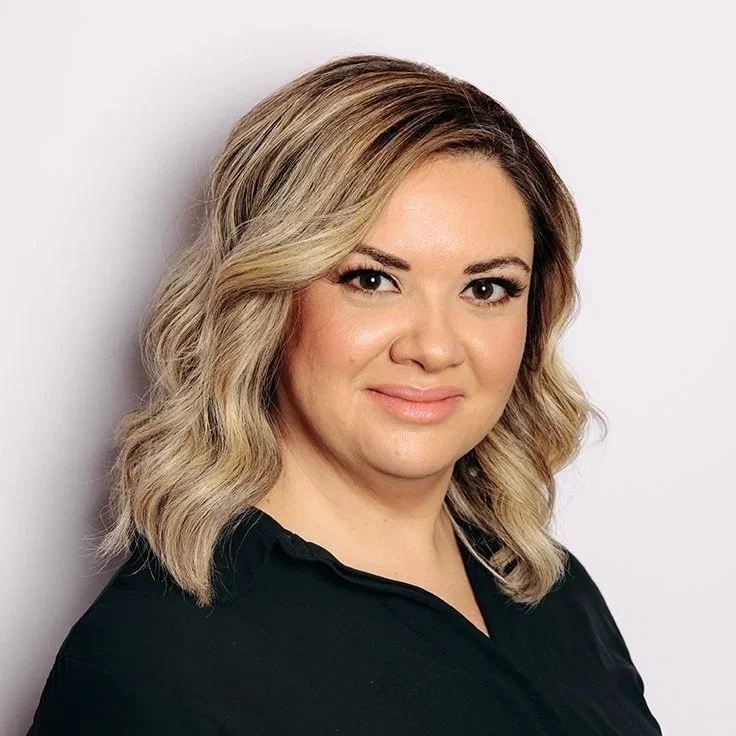
Dr. Vera Malushi, PT, DPT, PCS
Milestones Pediatric PT
Vera Malushi
Dr. Vera is a local mom of three (almost 4!) and a physical therapist with a national board certification in pediatrics. With many years of experience in pediatric physical rehabilitation, she founded Milestones Pediatric PT with the goal to provide high-quality pediatric PT and OT services, focusing on a comforting, family-oriented approach.